

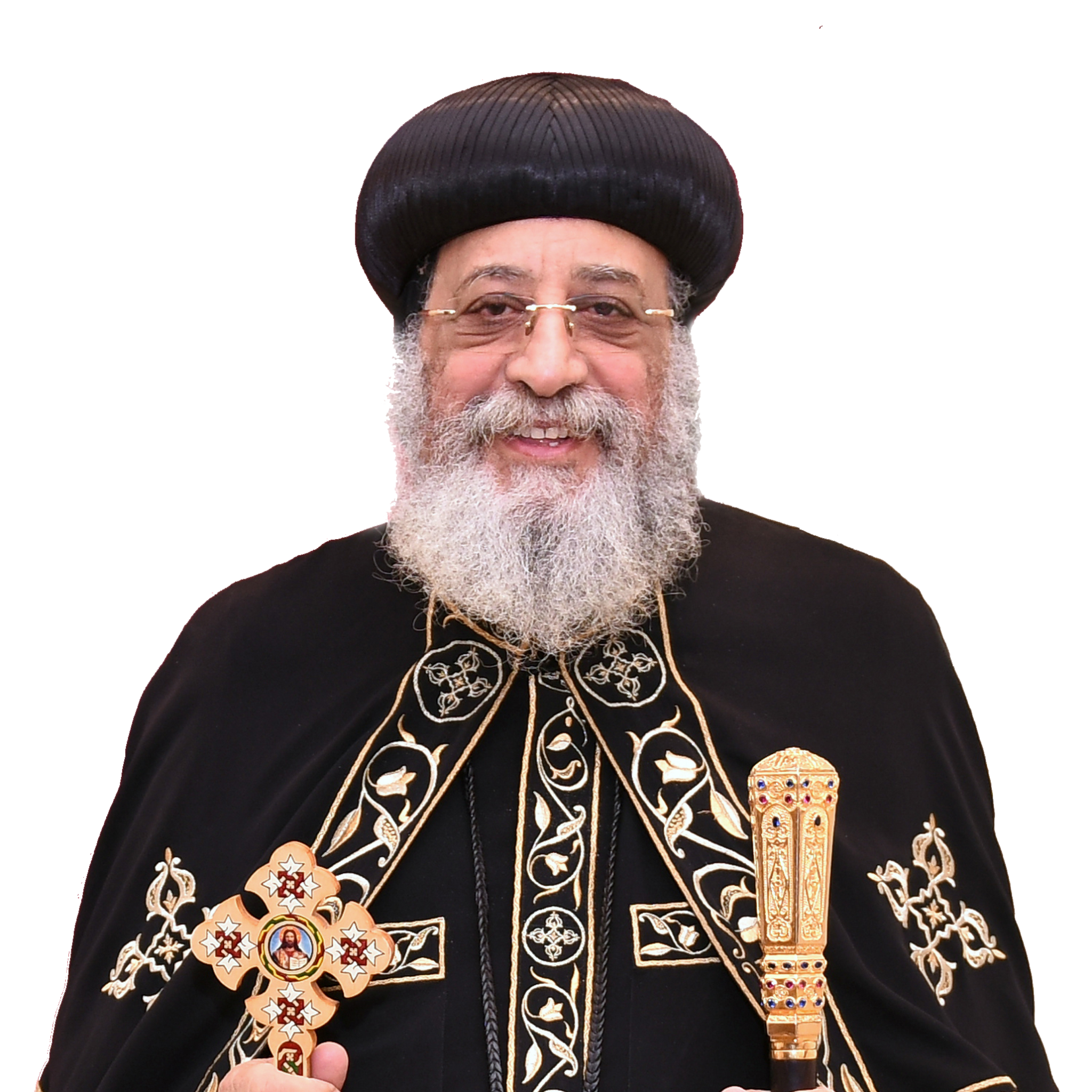

هنأ قداسة البابا تواضروس الثاني، أبناء الكنيسة بمناسبة عيد السيدة العذراء الذي يحل غدًا.
جاء ذلك قبل بدء عظته باجتماع الأربعاء الأسبوعي والذي أقيم مساء اليوم بكنيسة السيدة العذراء والقديس الأنبا بيشوي بالكاتدرائية المرقسية بالعباسية.
وقال قداسة البابا:
كل سنة وحضرتكم طيبين بمناسبة نهاية صوم السيدة العذراء وغدًا العيد الذي نحبه كثيرًا في كنيستنا. وأمنا العذراء نتكلم عنها كثيرًا، عن رائحة المسيح التي فيها نحبها ونطوبها كما قالت: “هُوَذَا مُنْذُ الآنَ جَمِيعُ الأَجْيَالِ تُطَوِّبُنِي، ” (لو ١ : ٤٨).
قداسة البابا يدعو إلى تسجيل سير رواد مدارس الأحد
دعا قداسة البابا مسؤولي الكنائس من الآباء الكهنة والخدام إلى تسجيل سير رواد مدارس الأحد بكنائسهم، ممن كانت لهم بصمة واضحة في خدمة مدارس الأحد وذلك لضمها إلى الجزء الثاني من كتاب “رواد مدارس الأحد” الذي صدر الجزء الأول منه منذ أيام.
جاء ذلك خلال اجتماع الأربعاء الأسبوعي والذي أقيم مساء اليوم بكنيسة السيدة العذراء والقديس الأنبا بيشوي بالكاتدرائية المرقسية بالعباسية.
وقال قداسة البابا:
السنة الماضية احتفلنا بمرور ١٠٠ سنة على مدارس الأحد وبدأنا نخرج موسوعة عن مدراس الأحد، كان أول كتاب بعنوان “تاريخ مدارس الأحد في مئة سنة”، أْصدر العام الماضي من طباعة وتوزيع دير مارمينا، والكتاب الثاني بعنوان “رؤية مستقبلية لمدارس الأحد” وهذه الكتب هامة جدًا لأنها تحكي تاريخ كنيستنا، الكتاب الثالث الذي صدر منذ بضعة أيام بعنوان “رواد مدارس الأحد” يتناول الشخصيات الذين قامت على أكتافهم مدارس الأحد، وبه من كل النوعيات مثال “أنبا أثناسيوس مطران بني سويف” وبه آباء بطاركة ومطارنة وآباء أساقفة وآباء كهنة
وكمثال “ليديا بنيامين” لا يعرفها معظمكم.
هذا الكتاب احتوى على ٦٨ سيرة لأشخاص عبر المئة عام قادوا مدارس الأحد، وسمي بالكتاب الأول لأننا نعد الكتاب الثاني لباقي السير، و كل شخص لديه سير لأشخاص على مستوي الجمهورية لهم دور وفاعلية في مدارس الأحد يكتبها ويرسلها لنا، عن طريق كاهن الكنيسة أو يرسلها عن طريق السكرتارية أو على عنوان مجلة الكرازة، ومن المهم جدًا أن تبحث في حياة الأجداد عن شخصيات قاموا بخدمتهم في مدارس الأحد في كل محافظات الجمهورية ونحن نحب أن نسجل هذه السير للتاريخ وهذه مسؤولية. قم بكتابة السيرة وإرسالها لنا وإذا كان ملحقًا بها صورة يكون شيء جيد جدًا.
بعض البيوت لديها كتب قديمة وقد تكون مكتوبة بخط اليد وهي غير مستخدمة، يمكن أن تجمعها و ترسلها لنا لأننا في سبيل إنشاء مكتبة كبيرة لتحفظ فيها هذه الكتب للتاريخ، فكل الذي لديه كتب قديمة أو جديدة ويريد أن يقدمها ويجعل الفائدة منها فائدة عامة يرسلها لنا فيستفيد بها كل الناس، نحن نعد الجزء الثاني من كتاب “رواد مدارس الأحد” فنحب أن نجمع باقي الشخصيات فاكتبوها وأرسولها لنا لنضعها في الجزء الثاني.
نعمة الشفقة.. العظة الأسبوعية لقداسة البابا تواضروس الثاني من كنيسة العذراء مريم والأنبا رويس – العباسية
بسم الآب والابن والروح القدس الإله الواحد آمين. تحل علينا نعمة ورحمتة من الآن وإلى الأبد آمين.
كل سنة وحضرتكم طيبين بمناسبة نهاية صوم السيدة العذراء وغدًا العيد الذي نحبه نكثيرًا في كنيستنا وأمنا العذراء نتكلم عنها كثيرًا عن رائحة المسيح التي فيها نحبها ونطوبها “كما قالت هوذا منذ الأن جميع الأجيال تطوبني”
تكملة سلسلة النعم السبع التي نشكر عليها الله كل يوم “نشكرك يارب لأنك سترتنا وأعنتنا وحفظتنا وقبلتنا إليك ” اليوم سوف نتأمل في النعمة الخامسة التي هي خاصة بالعذراء مريم ” أشفقت علينا وعضدتنا وأتيت بنا إلى هذه الساعة “
” أشفقت علينا” هذه النعم نصليها بصورة جماعية ونصليها في صلواتنا الخاصة وتدخل في الصلوات الطقسية و لها طريقتها ونغمتها ولها البخور الخاص بها ولها الرشومات التي ترشم أثنائها، فهي صلاة شخصية وصلاة طقسية ونصليها كصلاة جماعية بمعنى نصليها بنيابة عن الجميع ،وبها سبع نعم عامة لنا جميعًا كما يعطي الله جميع البشر الهواء والماء والنور “عطايا الله العظمة” من عطاياه أيضًا أنه يعطينا هذه النعم السبع في حياتنا كل نعمة هي نعمة يعطيها الله لنا جميعا ويسكبها على كل البشر.
“نعمة الشفقة ” وهي كلمة بها حنية ولها مترادفات كثيرة، الشفقة تعني الرحمة والرأفة والتعزية وتعني الأحساس بالأخرين مثل أمنا العذراء في موقف عرس قانا الجليل شعرت بالمأزق الذي فيه أهل العرس وذهبت للسيد المسيح وقالت له “ليس لهم خمر” وكلمة خمر في مدلولتها في معاني الكتاب المقدس تعني كلمة الفرح وكأنها تقول له ” يعيشوا في حزن” ولأن العهد القديم بأكمله لم يكن فيه فرح الخلاص ، كيف فهمنا أنها تقصد فرح الخلاص؟ لأن إجابة السيد المسيح أجابة خلاصية “مالي ولك يا أمرأة لم تأتي ساعتي بعد ” ساعتي تعني ساعة الصليب وهي قمة الرحمة والشفقة لبني البشر ، العذراء مريم تعطي لنا نموذج مصغر لأحساسها كإنسانه بشعور الأخرين ومشاكلهم والسيد المسيح في أجابته يقدم لنا أن ساعة الرحمة الشاملة والكاملة هي ساعة الصليب ، وكانت أول آيه يقوم بها السيد المسيح بعد ثلاث سنوات من هذا الحدث صلب السيد المسيح على الصليب وقدم الفداء والرحمة لكل البشر ، ولذلك أكثر كلمة نستخدمها في صلواتنا ” أرحمنا يا الله” ونقولها في أشكال كثيرة وكما نقول في مزمور التوبة وفي مقدمة المزمور نقول ” أرحمني يا الله كعظيم رحمتك” (عظيم رحمتك) تعني عظيم الشفقة إي شفقت الله لا تنتهي ، أعمال السيد المسيح كلها لا تخلوا من فعل الرحمة ( معجزات – أمثال – مقابلات) المعجزات كلها شفاء مرضى أو أقامة موتى كلها تحمل روح الشفقة والرحمة ، عندما يمر على الإنسان المطروح عند البركة ويقول له ” تريد أن تبرأ” لا أحد سأل المخلع طوال ال٣٨ سنة هذا السؤال فعندما أجاب المخلع ، المسيح كلي الحنية قال له “قم وأحمل سريرك وأمشي” وأعطاه نعمة الرحمة والشفقة التي كان يحتاجها الرجل ، و أمثال السيد المسيح كلها يوجد بها الرحمة “مثل الابن الضال” عندما عاد لم يجد في أبيه إلا عنصر الشفقة والرحمة “تحنن عليه أبوه” حتى في مقابلات السيد المسيح ، مثال مقابلته مع نيقوديموس والمرأة السامرية ونازفة الدم والمرأة الكنعانية وتحنن عليهم وتقابل مع زكا وتحنن عليه ، إذا خرجت الأن وقابلت السيد المسيح أمام الباب ماذا سوف تقول له ؟ سوف تقول له” أرحمني يا الله ” الطلب الأول والأخير الذي نطلبه من شخص السيد المسيح هو الرحمة ، سوف نذكر مواقف من الكتاب المقدس تظهر الله الشفوق الرحيم الذي يتحنن على جنس البشر ، نبدأ عندما ظهرت شفقة الله وأوجد أول إنسان ” آدم ” وعندما رأى آدم وحيد ” ليس جيدًا أن يكون آدم وحده فأصنع له معينًا نظيره” وخلق له “حواء” كانت خلقة آدم وحواء وحتى خلقة حواء بطريقة خاصة من آدم كانت نوع من شفقة الله على الإنسان وبعد السقوط في الخطية وكسر الوصية” صنع لآدم وحواء أقمصة من جلد والبسهما ” نوع من الشفقة والرحمة ، في قصة لوط كان الملاكان يُعجلوا من خروج لوط وعائلته من البلد التي سوف تحرق بنار وكبريت يقول الكتاب ” لما توانى أمسك الرجلان بيده وبيد امراته وبيد أبنتيه لشفقة الرب عليه” ، يعقوب أبو الأباء عندما تزوج ليئة ثم تزوج راحيل ، ليئة كانت أقل جمالاً من أختها راحيل وكان يعقوب يحب راحيل أكثر من ليئة ولكن لأن الله يشفق على ليئة فأعطاها نسل قبل راحيل ، شفقه الله على المساكين والفقراء نجد الكتاب المقدس مليء بالآيات التي تتحدث عن هذا الموضوع” يشفق على المسكين والبائس ويخلص أنفس الفقراء” ويتكلم عن الغريب واليتيم والضيف و كل أناس يكون في احتياج ، شفقة الله لا نستطيع أن نتكلم عليها أو نوصفها بتمام الوصف ، في العهد القديم كان حزقيا ملكًا صالحًا ” فجاء له إشعياء وقال له ” الرب يقول أنك تموت ولا تعيش” فبكي حزقيا وصلي إشعياء للرب وقال له كيف أن حزقيا الملك صار أمامه بالأمانة وبقلبًا سليم ، فأشفق الرب على حزقيا واستجاب لصلاته وفلم يخرج إشعياء من المدينة حتي أمره الرب أن يعود للملك حزقيا مرة أخرى وقال له ، قل له أن صلواتك قبلت وتحنن الله عليك ومد في عمرك ١٥ سنة، “قد سمعت صلاتك ورأيت دموعك ها أنا ذا أشفيك وأزيد على أيامك خمسة عشر سنة”
الشفقة … شفقة الله علينا في كل أحوالنا وفي أمور كثيرة قد لا نلاحظها ، العام الماضي قمنا بعمل مؤتمر كبير لشباب من كنائسنا في العالم ولحرارة الجو خفنا على الشباب فصلى الخدام للرب ليجعل الجو مناسب وتمجد الله وكان الجو معتدل في هذا الأسبوع ، شفقة الله وحنانه ، رحمة الله التي يتحنن بها علينا ، في العهد الجديد شفقة السيد المسيح تخللت كل شيء عندما قابل أثنان من العميان يجلسان على الطريق ” سمعا أن يسوع مجتاز فصرخا قائلين، ارحمنا يا سيد يا ابن داود فتحنن يسوع ولمس أعينهما فللوقت أبصرت أعينهما وتبعاه” ، أشفق على المرأة الكنعانية التي كانت تصرخ ” بنتي مجنونة” والسيد المسيح يدخلها في امتحان صعب ويقول لها ” ليس حسنًا أن يأخذ خبز البنين ويلقى للكلاب” ولكن المرأة الكنعانية في إيمان ثابت قالت له “وأيضا الكلاب تأكل من الفتات الساقط عن مائدة أربابها” فنظر لها السيد المسيح وقال لها “عظيم هو أيمانك” وتحنن عليها وشفى ابنتها ، يشفي الأبرص ويقيم ابن أرملة نايين ويقول لها ” لما رأها الرب تحنن عليها وقال لها لا تبكي ولمس النعش وأقام ابنها ودفعه إلى أمه” ، وأمنا العذراء الحنون هي أيضًا تحن على البشر وتتشفع عنهم مثل ما قامت به في عرس قانا الجليل ، السيد المسيح عندما قام بمعجزة أشباع الجموع يقول الكتاب ” أني أشفق على الجمع لأن الأن لهم ثلاثة أيام يمكثوًا معي وليس لهم ما يأكلوا ولست أريد أن أصرفهم صائمين لئلا يخوروا في الطريق” تحنن عليهم ، والجميل أن شفقة الله وحنانه ليست على البشر فقط ولكن على الحيوان أيضًا فيقول ” لا تحرث على ثور وحمار معًا” لأن الثور أقوى من الحمار وهذا به تعب وألم للحمار، وهناك مواقف كثيرة وخرجت من الكتاب المقدس جمعية “الرفق بالحيوان” وأيضًا حقوق الإنسان Human Rights أغلبها من الكتاب المقدس وهي شكل من أشكال الرحمة ، وأيضًا شفقة الله على الطيور ” المعطي البهائم طعامها ولفراخ الغربان التي تصرخ” ، , وأيضًا شفقة الله على الأرض يقول ” ست سنين تزرع أرضك وتجمع غلاتها وإما السبعة فتريحها وتتركها …ليأكل فقراء شعبك وفضلتهم تأكلها وحوش البرية” ، الرحمة صفة من الصفات العالية التي يتميز بها الإنسان ولكن للأسف الشديد الإنسان يصيب قلبه القسوة يقوم البشر بحروب بينهم والحيوانات لا يقوموا بهذا ، الإنسان يتخلي عن الرحمة التي في قلبه ” كونوا رحماء كما أن اباكم رحيم” ، كيف ينال الإنسان شفقة الله ورحمته …
أولا : التوبة
التوبة تجعل الله يسكب عليك كل البركات ، و تُفرح السماء ” السماء تفرح بخاطئ واحد يتوب ” فالتوبة هي التي تسكب رحمة الله على الإنسان يوم ما تاب الابن الضال كان كل ما يتمني أن يكون أجير عند أبوة لكن أبوة قبله وتحنن عليه لم يكن في تفكيره هذا ولكن توبته جلبت كل هذه العطايا ” كما يترأف الأب على البنين يترأف الرب على خائفيه لأنه يعرف جبلتنا يذكر أننا تراب نحن ” توبتك تجعل الله يتحنن عليك
ثانيًا: التسامح
أن يكون لديك القدرة على التسامح هناك مشكلات في العالم تستمر لسنوات كثيرة وتخيل لو طرف صالح الطرف الأخر ينتهي الصراع ” أغفر لنا ذنوبنا كما نغفر نحن أيضًا للمذنبين إلينا” ” أن لم تغفر للناس زلاتهم لا يغفر لكم أبوكم أيضا زلاتكم” علم نفسك أنك تقدر تسامح ، قد تبدوا كلمة سهلة ولكنها صعبة في التطبيق ، سامح واصفح لتنسكب عليك رحمة الله وشفقته.
ثالثًا: عمل الرحمة
علم نفسك تعمل أعمال رحمة بكل شكل ، ضع أمامك الآية ” كونوا رحماء كما أن أباكم هو رحيم” شفقتك على الإنسان الضعيف هناك من يتلذذ بإزلال الأخر وتعذيب الأخر كل هذه اللأفعال تطيح بالإنسان بعيدًا عن السماء وأنت تقف تقول ” نشكرك لأنك اشفقت علينا ” الله يشفق عليك وأنت لا تشفق على أخيك الإنسان مهما كانت قرابته لك ، علم نفسك وأنت تحتفل بعيد العذراء أمنا الحنون تضع أمامك هذه النعمة التي يسكبها الله عليك ” نعمة الشفقة” علم نفسك عينيك كيف تكون رحيمًا؟ لكي تتمتع برحمة الله ، أبحث عن أي قساوة في قلبك وقل له يارب بشكرك لأنك أشفقت علينا وأعطيني نعمة أن اشفق على الأخرين هذه هي النعمة رقم ٥ في صلاة الشكر و كل سنة وأنتم طيبين لإلهنا كل مجد وكرامة من الأن وإلي الأبد آمين.
In the name of the Father, and of the Son, and of the Holy Spirit. One God. Amen. May His grace and His mercy rest upon us, from now and forevermore. Amen.
By the grace of Christ I will read a section from the second chapter of the Gospel of our teacher St. John, one of the scenes in which our Mother the Virgin Mary appears and is revealed to be a tenderhearted and compassionate mother.
1On the third day there was a wedding in Cana of Galilee, and the mother of Jesus was there.
2Now both Jesus and His disciples were invited to the wedding.
3And when they ran out of wine, the mother of Jesus said to Him, “They have no wine.”
4Jesus said to her, “Woman, what does your concern have to do with Me? My hour has not yet come.”
5His mother said to the servants, “Whatever He says to you, do it.”
6Now there were set there six waterpots of stone, according to the manner of purification of the Jews, containing twenty or thirty gallons apiece.
7Jesus said to them, “Fill the waterpots with water.” And they filled them up to the brim.
8And He said to them, “Draw some out now, and take it to the master of the feast.” And they took it.
9When the master of the feast had tasted the water that was made wine, and did not know where it came from (but the servants who had drawn the water knew), the master of the feast called the bridegroom.
10And he said to him, “Every man at the beginning sets out the good wine, and when the guests have well drunk, then the inferior. You have kept the good wine until now!”
11This beginning of signs Jesus did in Cana of Galilee, and manifested His glory; and His disciples believed in Him.
12After this He went down to Capernaum, He, His mother, His brothers, and His disciples; and they did not stay there many days.
And glory be to God always and forevermore. Amen.
First of all, congratulations to all of you on the occasion of the end of the Fast of the Virgin Mary and on the Feast of the Virgin Mary, which we will be celebrating tomorrow. This Fast and Feast are dearly loved by our Church, as we love our Mother the Virgin Mary and never grow tired of praying praises about her, is it not so? We perceive the essence of Christ in her and we love her very much and bless her, as she herself said, “From now on all generations will call me blessed” (Lk 1:48).
I had begun a series with you on the seven graces of God for which we thank Him every day in The Prayer of Thanksgiving. We pray saying:
“Let us give thanks to the beneficent and merciful God, the Father of our Lord, God and Savior, Jesus Christ, for He has covered us, helped us, guarded us, accepted us to Himself, spared us, supported us, and has brought us to this hour.”
I have already contemplated the first four graces with you – “He has covered us, helped us, guarded us, accepted us to himself” – and today I want to contemplate the fifth grace with you and it is a grace that is associated to our Mother the Virgin Mary, which is the grace of God’s compassion.
A review of unique characteristics of The Prayer of Thanksgiving
In the previous talks in this series I spoke to you about the graces of The Prayer of Thanksgiving and told you that:
We pray this prayer both liturgically and personally. The priest prays it during the Liturgy and it has a certain ritual and we also begin all our hourly prayers with it, but that also on an individual level you can pray this prayer personally at home, whether when you are reading the Psalms or doing the Agpeya Prayers, and a person may pray it once, twice, or even more times every day.
It is prayed in the plural form. And so when you stand at home alone and you pray this prayer, even if all the other members of your family are busy with work or study or travel and so on, when you say “Let us give thanks,” you are praying on behalf of everybody else, and this is a very beautiful thing about this prayer.
The seven graces are given to every single person. As God gives the great graces of air, water, and light to every human, so He also gives each of these seven graces to each one of us in our lives.
We thank You because You covered us – which is the grace of God’s covering us, we thank You because you help us – which is the grace of God’s helping us, we thank You because You guard us – which is the grace of God’s guarding us, we thank You because you accept us – which is the grace of God’s accepting us, and so on. And so it is that God gives us each of these seven graces and pours them out upon all people.
Today I want to talk to you about the grace of compassion – God spares us. And the word ‘compassion’ is one of those very tenderhearted words and it has many synonyms. Compassion can mean mercy, comfort, the innermost parts of a person (as when a person is feeling something very deeply), and it also means to have sympathy or to feel what others are feeling. When a person feels what others are feeling, they have compassion upon them, just as our Mother the Virgin Mary did in today’s Gospel reading.
She senses the dilemma and the embarrassment that the family having the wedding at Cana of Galilee must have been feeling and she went to the Lord Christ and said to Him, “They have no wine.” In the Holy Bible, one of the meanings of the word ‘wine’ is ‘joy,’ and so it was as if she were saying to Him, “They are living in sadness, they have no joy.”
And they did not have joy because the entire Old Testament did not have the joy of salvation. And you may ask me how I got that they were talking about the joy of salvation here; it is because Christ’s response to her was a salvation-based response. He said to her, “Woman, what does your concern have to do with Me? My hour has not yet come.” And let us pause and reflect on these words: “My hour,” which mean “the hour of the cross,” and the hour of the cross is the pinnacle of mercy and the pinnacle of compassion toward humanity, do you see this?
And so it is as if the Virgin Mary, with her ability to sense the needs of others when they fell into a dilemma, is giving us a microcosmic example of God’s compassion for humanity, which Christ reveals to us at the hour of the cross, the hour of complete and perfect compassion.
Turning the water to wine was the first miracle Christ did, and it was three years after this event that Christ was crucified on the cross and offered salvation and mercy to all of humanity, and this is also why the word we use most in our prayers is the word ‘mercy’ – “Have mercy upon me, O God,” and we say in many other forms, most commonly we say it in the form of “Kyrie eleison” (Lord have mercy).
And as we pray in the Psalm of Repentance, we begin it by saying, “Have mercy upon me, O God, According to Your lovingkindness” (Ps 51:1), and “Your lovingkindness” means “the greatness of compassion,” meaning that God’s compassion is endless – You had compassion on us, You spared us.
Christ’s compassion
1-In His miracles
And I want to tell you that all of Christ’s works, without exception, none of them are void of compassion. Whether miracles, parables, or interactions, everything Christ did and said was full of compassion. He did many miracles and most of them were miracles of healing the sick or raising the dead, and all of these miracles, as with the miracle of the wedding at Cana of Galilee, they all carried the spirit of compassion, the spirit of mercy.
When He passes by the man who laid by the pool (Jn 5:1-11) and says to him, “Do you want to be made well?” I would imagine that in all 38 years, no one had ever asked that man this question. And so when the man gave his nice response and said, “I have no one to help me,” Christ, with all tenderness and tenderheartedness said to him, “Rise, take up your bed and walk,” and so He gave him the grace of mercy and compassion, which was what the man really needed to begin with. This is with regard to miracles.
2-In His parables
As with regard to parables, in all the parables Christ told you will find that spirit of mercy – in all the parables, without exception. When He told us the parable of the prodigal son who had lost his way and left home (Luke 15), when this son returned, the only thing he found in his father was the essence of mercy and compassion, as He told us, “His father saw him and had compassion” (Lk 15:20). Compassion, tenderness.
3-In His interactions
Even in the Lord Christ’s interactions we see compassion. He interacted with many people. He met with Nicodemus – and this was a very prominent Jew, and He also met with many women, women whose names we do not even know. The Samaritan woman, the woman with the issue of blood, and the Canaanite woman – these are all women whose names we do not know, and He had compassion upon them all.
And he met with men like Zacchaeus, for example, and He had compassion upon him. I want to ask you a question: If you went out the door of the church right now and met Christ at the door, what would you say to Him? What do you imagine you would say to Him? “Welcome, welcome, we are so pleased You are here,” or, “Come tomorrow, we’re going to be celebrating the Feast of the Virgin Mary”? What will you say to Him? You will say, “Have mercy upon me. Have mercy upon me, O God.”
The first and last thing we ask of Christ is mercy, and this is why I want to give you a quick summary of several scenes from the Holy Bible that reveal God the compassionate, the merciful, who shows tenderhearted loving-kindness toward the human race.
Come with me and let us begin with God’s compassion when He created the first human being, Adam. And when He found Adam to be all alone, surrounded by animals but with no one to talk to, and in a very beautiful way the Bible tells us, it says, “It is not good for man to be alone so He made him a helpmate” (cf. Gen 2:18), and this helpmate was Eve, the first woman.
And so it was that the first people, Adam and Eve, and even the very creation of Eve, were demonstrations of God’s compassion toward humans – “It is not good for Adam to be alone.” And even after both of them fell in sin and broke the commandment, it says, “Also for Adam and his wife the Lord God made tunics of skin, and clothed them” (Gen 3:21). This is another demonstration of compassion, a demonstration of mercy.
In the story of Lot, the angels urged Lot and his wife and his daughters to hurry and leave Sodom and Gomorrah because the city was going to be burned with fire and brimstone. The Bible says, “And while he lingered, the men (who were the two angels) took hold of his hand, his wife’s hand, and the hands of his two daughters, the Lord being merciful to him, and they brought him out and set him outside the city” (Gen 19:16), and so even in the midst of all this wickedness God was merciful. The scent of evil and corruption had so filled these two cities of Sodom and Gomorrah, but here was this man called Lot, a righteous man who lived there whose soul was being tormented daily, and so God had compassion upon him and sent him these angels to get him out of there quickly.
When our patriarch and forefather Jacob married Leah and then later married Rachel, Leah was not as beautiful as Rachel and at the same time Jacob loved Rachel more than he loved Leah. And so because Leah was not as loved as Rachel, God had compassion on her and gave her children, but He delayed Rachel’s ability to give birth. Of course Rachel did have children later, but what I mean is that God had compassion on Leah and wanted to give her honor, and so He was tenderhearted toward her and gave her children before giving children to her sister.
God’s compassion toward the poor and needy
You will find that the Holy Bible is filled with verses on this subject. “He will spare the poor and needy, and will save the souls of the needy” (Ps 72:13). He also talks about the stranger, the orphan, the visitor, and any person who is in a moment of need, but nobody can really talk about the compassion of God nor accurately describe it.
In the Old Testament Hezekiah the king was a good king, but one day the Prophet Isaiah came to him and said, “Thus says the Lord, ‘… for you shall die and not live’” (Isa 38:1). And we read that “Hezekiah wept bitterly … and prayed to the Lord, and said, ‘Remember now, O Lord, I pray, how I have walked before You in truth and with a loyal heart, and have done what is good in Your sight” (Isa 38:3).
It goes on to say, “And the word of the Lord came to Isaiah, saying, ‘Go and tell Hezekiah, “Thus says the Lord, the God of David your father: I have heard your prayer, I have seen your tears; surely I will add to your days fifteen years’”’ (Isa 38:4-5). And so God would not permit Isaiah to leave the city before going back to Hezekiah to tell him that God had heard his prayer, had compassion upon him, and had added fifteen years to his life. God had compassion upon him and spared Him.
And God has compassion upon us and spares us through many situations and in many matters that we may not even notice at all. For example, in August of last year we held a very big conference for our youth from across the world. In Egypt, August is the month of extreme heat and many of them were coming from countries that are much cooler, and so we were concerned for these youths who were coming to attend the conference.
And so our Church servants suggested, “Let us have a prayer meeting and meet together to pray for a month, before August, so that the Lord would give us pleasant weather during the week of the conference.” What do you think about that? And so a group of church servants began to pray every day, “Lord, let the weather be nice during August.”
Also, during the month of August there are many mosquitos in Egypt. We are used to them and they are used to us, but these people coming to visit us, well… And so we were afraid that if they were to get bit by mosquitos it would become a big problem – maybe their skin wasn’t used to such bites or they may have skin sensitivities, or anything of the sort. And so in seeking a solution to this problem the church servants added this to their prayers for the month of August: “Lord, we don’t want heat and we don’t want mosquitos.”
And the greater part of our visitors’ one week visit was spent in the monasteries, and the monasteries are in the desert, and desert means heat, but so it was that God was glorified and had compassion upon us and upon them and made it so that the weather was extremely moderate during that week and that the mosquitoes did not come at all. We had been so concerned about the issue of the mosquitoes to the extent that the group who was responsible for organizing the event had searched far and wide and purchased the conference participants some sort of wrist bracelet to ward them off, but the mosquitos never came. The compassion of God, the tenderness of God, the mercy of God which He has toward us.
In the New Testament, the Lord Christ’s compassion permeated everything, as I told you in the beginning. For example, it tells us that “Two blind men sitting by the road, when they heard that Jesus was passing by, cried out, saying, ‘Have mercy on us, O Lord, Son of David!’” (Mt 20:30), and the Bible tells us “So Jesus had compassion and touched their eyes. And immediately their eyes received sight, and they followed Him. He had compassion” (Mt 20:34).
He had compassion on the Canaanite woman who cried out to Him saying, “My daughter is severely demon-possessed” (Mt 15:22), and Christ gave her a difficult test when He answered her and said, “It is not good to take the children’s bread and throw it to the little dogs” (Mt 15:26).
Of course this was a very harsh answer because it was as if Christ was comparing her to dogs, but with steadfast faith the Canaanite woman responds and says, “Yes, Lord, yet even the little dogs eat the crumbs which fall from their masters’ table”(15:27), and so Christ looked upon her and said, “O woman, great is your faith!” (Mt. 15:28). You have passed the test – “Let it be to you as you desire.” And so it was that He showed her compassion and healed her daughter.
He healed the leper and raised the son of the Widow of Nain, her only son. And it says, “When the Lord saw her, He had compassion on her and said to her, ‘Do not weep.’ Then He came and touched the open coffin, and those who carried him stood still. And He said, ‘Young man, I say to you, arise’ … And He presented him to his mother” (Luke 7:13-14). And there are many, many other examples.
And our Mother the Virgin Mary, whom we refer to as our “tender-hearted” mother and describe her in many other nice ways, she also has compassion upon humanity and so she intercedes on their behalf, as she did in the wedding at Cana of Galilee.
When Christ did the miracle of feeding the multitudes, why was it that He fed these people? The Bible tells that “Jesus called His disciples to Himself and said, ‘I have compassion on the multitude, because they have now continued with Me three days and have nothing to eat. And I do not want to send them away hungry, lest they faint on the way’” (Mt 15:32). He fed them because He had compassion upon them.
God’s compassion extends to all creatures
1-Toward humans (discussed above)
2-Toward animals
And a very beautiful thing is that God’s compassion and tenderness are not only demonstrated toward humans but also toward animals. For example it says, “You shall not plow with an ox and a donkey together” (Deut 22:10). Of course an ox is stronger than a donkey, and so if a person wants to plow a field and yokes the two together, they would not be moving at the same speed and this would cause a lot of pain and suffering for the donkey. And so if you want to plow, plow with the ox alone.
There are many other examples of compassion toward animals throughout the Bible, and it may be that it is from the Holy Bible that we got organizations such as the Society for Animal Rights. And even with people, when we began to have principles around “human rights,” most of these came from the Holy Bible, and they are a form of mercy.
3-Toward birds
And I want to tell you that God’s compassion does not only extend to humans and animals, but it also extends to birds. It says, “He gives to the beast its food, and to the young ravens that cry” (Ps 147:9). What is this about? When the raven’s young chicks come out of the egg their color is white, and the parent ravens becomes afraid of and irritated by this color, and so the father and mother ravens fly off and leave these little white chicks because they do not like this white color.
And so how are these young ravens to eat? They open their mouths toward heaven, toward God, as if crying out to God saying, “Feed us, care for us.” And here comes the compassion of God, that while their mouths are open, God sends them little insects right into their open mouths for them to eat. And when they start growing, little by little, their white color begins to change to the darker grey or black color, and when this happens, the mother and father ravens return to them and take care of them. God’s compassion is even upon the birds.
And so Lord, You do not even forget the little birds and their needs, and you give them that which changes their color so that the mother or father raven would return to them at just the right time to continue taking care of them? And He says, “Of course.”
4-Toward the land
And God’s compassion is not only upon humans, animals, and birds, but God has compassion also upon the land. Can you imagine that God tells people to plant the land for six years but to then give the land a rest in the seventh year and leave it unplanted? If you continually plant it without giving it a rest, the land’s produce and harvest will be reduced because it is overworked, and so leave it alone for one year so that the essential nutrients and elements may be rebuilt back up in it.
The Bible says, “For six years you are to sow your land and gather its produce, but in the seventh year you must let it rest and lie fallow, so that the poor among your people may eat from the field and the wild animals may consume what they leave” (Exo 23:10-11). And so even the land, God cares for it.
I want to tell you that mercy and compassion are among the highest features that distinguish a human being, but it is very unfortunate that a person surrenders his heart to cruelty and lets his heart become hardened like a stone. And this can happen with anyone – sometimes with a father or mother or children or grandchildren or the old or the young, but just imagine that humans create enmity with one another and have wars! And yet animals don’t do this, and plants don’t do this, but a human may abandon the mercy that is within his heart.
There is a beautiful verse that you have all memorized, it says, “Be merciful, just as your Father also is merciful” (Lk 6:36). Be merciful.
How may I attain the mercy and compassion of God?
And so the question may come: How can a person attain the mercy or the compassion of God? I will tell you three things that act as channels for the mercy of God in your life.
Repentance
The first channel for God’s mercy is repentance, a person’s repentance. Repentance causes God to pour every blessing upon you. Your repentance even brings joy to heaven – “There will be more joy in heaven over one sinner who repents” (Lk 15:7,10). The entire heavens – saints and angels, they all rejoice when one sinner repents. And so it is repentance that makes God’s pour out mercy upon a human.
The day the prodigal son repented and was making his way back home (Luke 15), the only thing on his mind was, “If only my father would take me back, even as one of his hired servants.” He never imagined that his father would come out to meet him, or that he would get “The best robe put on him, and put a ring on his hand and sandals on his feet” (cf. Lk 15:22) – he did not think about nor consider any of these things.
But when he arrived, his father met him, embraced him and kissed him, and gave him the robe and the ring and the sandals, and killed the fatted calf. He had expected none of this, but his repentance drew all these graces and all these blessings upon him. A person’s repentance.
And repentance is found in many arenas and in many stories throughout the Bible, it tells us, “As a father pities his children, so the Lord pities those who fear Him. For He knows our frame; He remembers that we are dust” (Ps 103:13-14). Your repentance leads God to have compassion upon you.
Forgiveness
The second channel for receiving God’s mercy and compassion is related to your ability to continually forgive. When we look around the world we see that there are problems that are 50 or 60 years old, or more, for example, the problem between North and South Korea. Their war was back in 1953 but until this day they are still not reconciled. Can you imagine that? People.
But imagine if there were a problem and one party forgave another, it would be end-of-story. And God pours the graces on a person who forgives, as we pray saying, “And forgive us our debts, as we forgive our debtors” (Mt 6:12). And in the Gospel of St. Mark He tells us, “But if you do not forgive, neither will your Father in heaven forgive your trespasses” (Mk 11:26).
Teach yourself to be able to forgive. And by the way, the word ‘forgive’ is a very easy word to say and a word that we all say very easily, but I am certain that there are many people who are unable to forgive others. They will say things like, “I haven’t forgotten … he did this 20 years ago,” or “I haven’t forgotten what he did 10 years ago,” but how would you like it if the Lord treated you in this same way and said to you, “I have not forgotten what you did last year and ten years ago and 20 years ago”? It would be the better route to forgive others in order that God’s mercy and compassion would pour forth upon you.
Acts of mercy
The third channel for receiving God’s mercy and compassion is acts of mercy. Do acts of mercy. Train and teach yourself as to how to do acts of mercy, in all their forms. Place the verse before you that says, “Be merciful as your Father is merciful.”
Have compassion towards a weak person. There are people – and may the Lord protect you all from this, but there are people who actually enjoy humiliating others, who find joy in the suffering of others, you find joy when others fall into a dilemma or a problem – they get a sense of joy when they can say, “I told you so.”
All these kinds of things keep a person far from heaven, and all the while you are standing in prayer saying, “We thank You because You had compassion upon us.” And so the Lord has compassion upon you but you will not have compassion on your human brother? Teach yourself, especially as you celebrate the Feast of our Mother the Virgin Mary, our tenderhearted mother, to place before you this great grace which God pours out upon you, the grace of compassion.
And place before you that if there is a person or people within your home – even between a husband and wife, between parents and their children, between relatives, between neighbors, between beloveds, between friends, or in our human relations in general – teach yourself how to be merciful that you may be able to enjoy the mercy of God.
Search for any cruelty in your heart and say to Him, “Lord, I thank You because You have had compassion upon us and spared us. And because You have shown me compassion and spared me, give me the grace that I may be able to have compassion on others.”
This is the fifth grace in The Prayer of Thanksgiving.
Glory be to our God from now and forevermore. Amen


