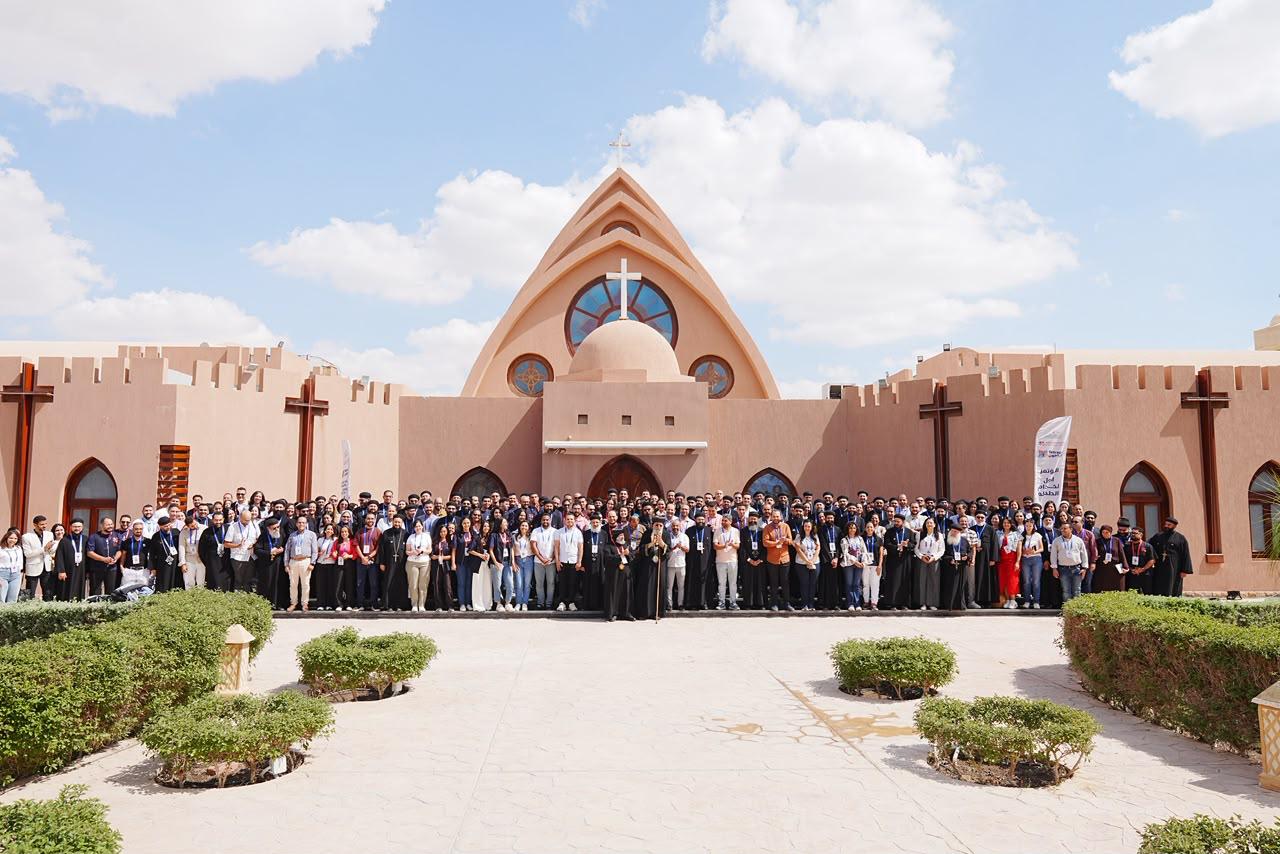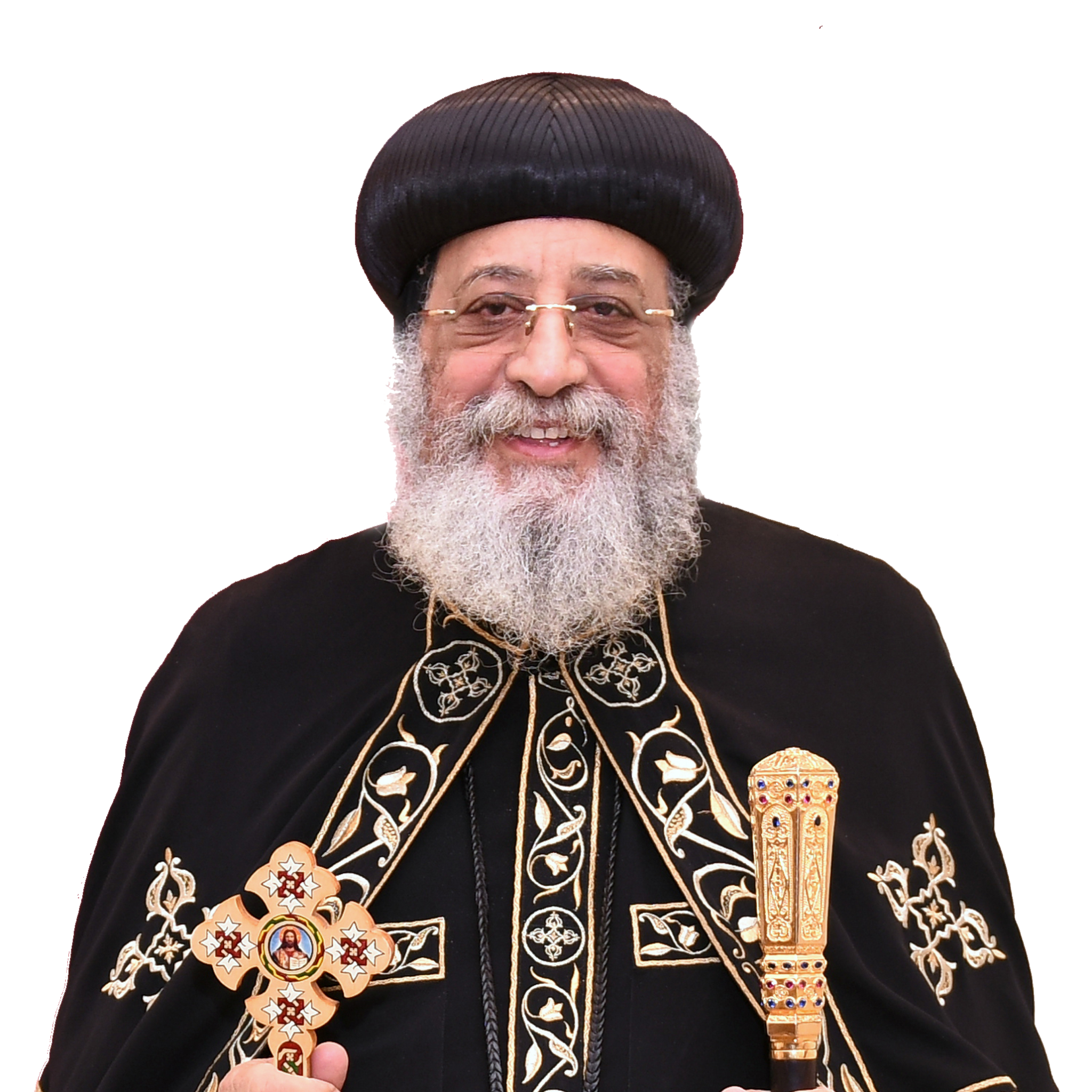

This morning, H.H. Pope Tawadros II prayed the Divine Liturgy at the Church of Virgin Mary and Saint Bishoy in Saint Mark’s Cathedral in Abbassiya, on the occasion of the commemoration of the departure of the Thrice-Blessed Bishop Makary, Bishop of the Sinai Peninsula. The liturgy was part of the celebration marking the 25th anniversary of his passing.
Participating in the liturgy were H.G. Bishop Angelos (General Bishop of the Churches of North Shoubra Sector), H.G. Bishop Bavly (General Bishop of the Montaza Sector in Alexandria), along with several priests, monks, members of the late bishop’s family, and many of his spiritual children and loved ones.
In his sermon, Pope Tawadros spoke on the Gospel reading, which was taken from the beginning of the Sermon on the Mount — the Beatitudes — noting that the Beatitudes spoken by the Lord Christ contain the fundamental teachings for our entire spiritual life. They outline the life of man, and therefore they are not to be selectively applied but rather taken all together by anyone who desires to live a true life with Christ.
He added: “The word ‘Blessed*’ means blessing, grace, endurance, joy, and the work of God’s hand in a person’s life. It is also the very first word in the Book of Psalms.”
His Holiness meditated on three of the Beatitudes, which were:
- “Blessed are the meek, for they shall inherit the earth” (Matt 5:5).
He pointed out that meekness in a person is one of the ways Christ dwells in the human heart. The meek inherit the earth, and meekness is a fundamental trait of the saints. This was clearly seen in the late Bishop Makary, who was meek in his speech, conduct, and service. And now, 25 years later, we still remember him, because his meekness won the love of many — and thus, he inherited the earth.
- “Blessed are those who hunger and thirst for righteousness, for they shall be filled” (Matt 5:6).
Those who hunger and thirst for Christ never get enough of Him. They are never satisfied with speaking to Him in prayer. They continually partake of His Body and Blood, yet their longing for communion never ceases. For this reason, the wise Mother Church reminds us during the Liturgy: “Do not love the world, nor the things in the world.”
This is so that our desire for God is not weakened. As St. Paul the Apostle says: “For to me, to live is Christ, and to die is gain.” (Phil 1:21).
His Holiness noted that every person has something that occupies the center of their life. One must examine themselves to see whether God is truly the center — or something else in the world. Bishop Makary was always longing (thirsting) for God, the Gospel, and prayer.
- “Blessed are the merciful, for they shall obtain mercy” (Matt 5:7).
In a world full of violence, conflict, and wars, the human heart has become hardened. That’s why the Church repeatedly leads us to say in our prayers: “Lord, have mercy.” The primary address between man and Christ is: “Have mercy on me, O God,” as we ask for mercy on our souls so that we might extend it to others — to be merciful, not harsh.
In the Midnight Praise, we pray: “There is no mercy for him who has not shown mercy.”
His Holiness emphasized that mercy was one of the traits of the late Bishop Makary, who was kind and cared for all those in need — even before becoming a bishop.
This page is also available in:
 العربية