


The Establishment of the Patriarchal Library
The origins of the Patriarchal Library date back to the pontificate of H.H. Pope Peter VII El-Gawly, the 109th Pope of Alexandria and Patriarch of the See of St. Mark (1809–1852), who established the Patriarchal Library at St. Mark’s Church in Azbakeya toward the end of 1813, more than two centuries ago.
Pope Peter El-Gawly was known as “the Scholar Pope,” as he had been deeply passionate about reading, study, and research in various fields of knowledge since his monastic life.
When he became Patriarch, the Patriarchate did not possess a library in the modern sense, particularly because of the looting and destruction that the Church had endured during earlier periods.
He therefore began collecting historical references as well as theological and liturgical books. Over time, he assembled a precious collection that included a number of exceptionally rare and invaluable manuscripts.
As the collection of valuable volumes continued to grow, Pope Peter El-Gawly designated an appropriate place for them within the Papal Residence at St. Mark’s Church in Azbakeya.
He personally organized the collection and established a dedicated register for it. He also commissioned a number of renowned scribes to copy unique books whose originals he had obtained from the Monastery of St. Anthony and from ancient churches in Cairo.
At that time, the library contained manuscripts and rare historical books, including works dating back to the early period of printing.
In 1950, the Bishops’ Residence at St. Mark’s Cathedral in Azbakeya became the home of the Patriarchal Library.
The Catalogue of the Patriarchal Library Manuscripts
Cataloguing represented a major milestone in the history of the Patriarchal Library.
Marcus Simaika Pasha, founder of the Coptic Museum, together with Yassa Abd El-Massih, Librarian of the Coptic Museum, undertook the important task of cataloguing the manuscripts.
Their work resulted in what became widely known as the “Simaika Catalogue,” an important scholarly reference for Coptic and Arabic manuscript collections.
The first volume of the catalogue of Coptic and Arabic manuscripts preserved in the Coptic Museum, the Patriarchal Library, major churches in Cairo and Alexandria, and monasteries throughout Egypt was published in 1939, with subsequent work continuing through 1942.
The catalogue was also made available in English, helping introduce these important manuscript collections to scholars around the world.
Following the passing of Yassa Abd El-Massih, Prof. Dr. Murad Kamil continued cataloguing manuscripts that had subsequently been added to the library.
Nabih Kamil Dawoud later continued overseeing the library until 2003.
A Serious Incident That Drew Attention
In September 2003, the Patriarchal Library suffered a serious incident when sewage water leaked from the Bishops’ Residence at St. Mark’s in Azbakeya into the walls and cabinets of the library.
The books and manuscripts sustained severe damage. Pages were left in a critical condition, adhering to one another as a result of mold and fungal growth, while insects caused further extensive damage to this invaluable heritage collection.
Recognizing the seriousness of the situation, the late Nabih Kamil, who was supervising the library at the time, sent a letter to Thrice-Blessed H.H. Pope Shenouda III requesting permission to transfer the manuscripts urgently to a location equipped with the necessary chemical and conservation facilities, in order to prevent their irreversible loss.
Following the letter sent by Nabih Kamil on October 2, 2003, H.H. Pope Shenouda III issued immediate directives that the matter be addressed urgently.
A committee was formed to inspect the Patriarchal Library in Azbakeya, receive its contents, and transfer the manuscripts to the Monastery of the Great Martyr St. Mina in Mariout for conservation and restoration.
When the Patriarchal Library Returns to the Pope and Patriarch… Heritage Rises Again
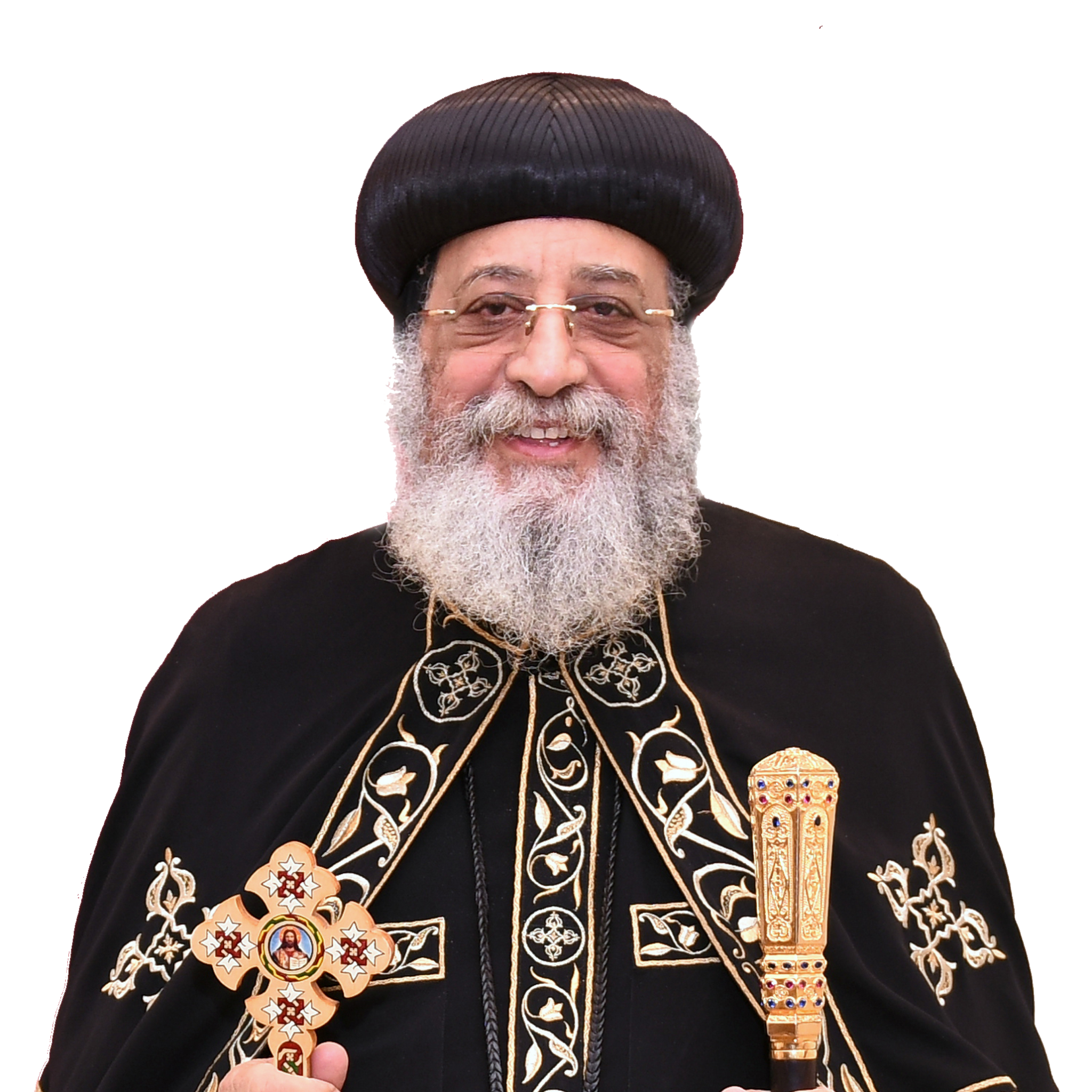
In March 2023, under the directives of H.H. Pope Tawadros II, the manuscripts of the Patriarchal Library were received following their restoration at the Monastery of the Great Martyr St. Mina in Mariout and were placed in the Central Papal Library.
The Central Papal Library thus became home to one of the most renowned and valuable collections of Coptic manuscripts.
The collection is internationally known through the catalogue associated with Marcus Simaika Pasha and is particularly valuable because of the rarity and diversity of its manuscripts.
The collection includes:
- Biblical manuscripts
- Language and linguistic manuscripts
- Theological manuscripts
- Canonical manuscripts
- Liturgical manuscripts
- Historical manuscripts
- Manuscripts covering a variety of other subjects
Establishing the Papal Center for Manuscripts
Phase One – Preserving the Manuscripts According to International Scientific Standards
The first phase focused on creating a specialized scientific environment for the preservation of the manuscripts in the Panorama Building at the Papal Residence, Monastery of St. Bishoy.
In January 2024, under the directives of H.H. Pope Tawadros II, work began on establishing the Papal Manuscript Center.
Two halls on the ground floor of the Panorama Building were selected. One was designated for manuscript storage and preservation, while the other was designated for the establishment of a specialized manuscript conservation and restoration laboratory.
The manuscript storage hall was carefully prepared, with temperature and humidity controls established according to optimal scientific standards to ensure the long-term preservation of the manuscripts.
In February 2024, a new chapter in the journey of the manuscripts began. The collection was transferred from the Central Papal Library to the Panorama Building, where the manuscripts were placed in specially designed storage units providing an appropriate environment for their preservation using modern scientific methods.
The Manuscript Storage Hall
The storage hall contains specialized cabinets fitted with individually designed drawers. A strict preservation protocol is followed:
- Each manuscript is stored horizontally in its designated drawer.
- Manuscripts are not placed on top of one another, although they may be stored side by side where appropriate.
- Each manuscript is assigned an individual Call Number, linked to its storage location.
- Temperature and humidity levels are continuously monitored.
- Integrated fire-protection systems are maintained.
- An annual disinfection schedule is implemented for the hall.
The hall also contains specialized reference resources supporting the work of the Center and researchers, including:
- Catalogues of Coptic manuscripts in Arabic and foreign languages.
- Catalogues of non-Coptic manuscripts in Arabic and foreign languages.
- Books and specialized studies in manuscript studies and codicology.
- Dedicated records and files of the Papal Center for Manuscripts.
Phase Two – Digitization of the Manuscript Collection
The digitization of the manuscripts held by the Center has been completed, creating high-quality electronic copies using advanced specialized digital imaging equipment.
Among the equipment used is the I2S V-Shaped Scanner, designed to digitize rare manuscripts and books while minimizing physical stress on the original material.
Phase Three – Establishing the Papal Manuscript Conservation and Restoration Laboratory
A fully integrated manuscript conservation and restoration laboratory has been established according to advanced scientific specifications.
The laboratory is equipped with modern specialized instruments, tools, and conservation materials.
Its specialists combine academic knowledge with practical expertise in conservation and restoration, enabling the laboratory to play a leading role in preserving and protecting Coptic heritage for future generations.
The laboratory includes a range of specialized equipment, including:
- Antique manual presses of various sizes.
- Board-cutting equipment.
- Chemical treatment equipment.
- Dry-cleaning equipment for manuscripts.
- Water distillation equipment.
- Drying equipment.
- Humidification equipment.
- Hydraulic press.
- Low-pressure table.
- Nitrogen-based manuscript disinfection equipment.
- Deacidification equipment.
The Center also includes a dedicated meeting and training room, supporting its educational and professional training mission alongside its preservation and restoration work.
Microbiology Center
The microbiological aspect represents one of the scientific fields associated with manuscript conservation, through the study and monitoring of biological factors that may affect heritage materials and manuscripts.
Activities of the Papal Manuscript Center
The Papal Manuscript Center serves researchers and scholars by providing integrated digital access to its manuscript collections, facilitating consultation and supporting specialized academic research.
The Center is also developing Optical Character Recognition (OCR) applications aimed at converting digital images of manuscripts into searchable text wherever technically possible.
Such technology has the potential to significantly expand opportunities for scholarly research within manuscript collections.
The Center is also developing an electronic catalogue for the manuscript library, enabling easier subject-based searching and access to manuscript records.
At the same time, restoration work has begun on deteriorated manuscripts in the Papal conservation laboratory.
The Center also provides a digital imaging service for manuscript collections belonging to monasteries and churches, using advanced specialized imaging equipment and without charge, while preserving the owners’ exclusive rights regarding the display of their manuscripts.
International Cooperation and Exchange of Expertise
As part of its commitment to developing expertise in manuscript studies, preservation, and restoration, the Center has pursued cooperation and professional exchange with leading international institutions, including:
- Bibliothèque nationale de France (BnF) – April 2023.
- Biblioteca Ambrosiana, Milan, Italy – September 2024.
The Center also seeks to organize intensive specialized courses in manuscript studies for those responsible for manuscript libraries in monasteries and churches throughout the See of St. Mark.
These programs aim to strengthen professional expertise and promote high standards in the preservation and scientific handling of manuscript collections.
Inauguration of the Papal Manuscript Center
On Friday, May 22, 2026, His Holiness Pope Tawadros II, Pope of Alexandria and Patriarch of the See of St. Mark, inaugurated the Papal Manuscript Center at the Logos Center in the Monastery of Saint Bishoy, Wadi El Natroun. The inauguration took place on the sidelines of the General Session of the Holy Synod, which was held at the LOGOS Papal Center on the same day.
The inauguration was attended by a large number of members of the Holy Synod, reflecting the importance the Coptic Orthodox Church places on preserving its manuscript heritage and safeguarding its original historical sources.
Following the inauguration, H.H. Pope Tawadros II and the members of the Holy Synod listened to a presentation by Fr. Wissa St. Bishoy, the monk-priest overseeing the Center. He presented an overview of the Center’s capabilities, departments, and scope of work.
The presentation explained that the Center was designed in accordance with the standards of the United Nations Educational, Scientific and Cultural Organization (UNESCO), taking into consideration the nature of the heritage materials housed within the Center and the specialized technical requirements for the preservation, conservation, and handling of manuscripts.
Requests to consult manuscripts must be submitted by completing the designated application form.
Researchers may download the application form in PDF format, print it, and complete all the required information. The completed form should then be submitted to one of the Secretariats of His Holiness Pope Tawadros II, for the necessary procedures and approval to consult the manuscripts.
At the Papal Residence in Cairo or Alexandria
Or via E-mail [email protected]
Or via WhatsApp on 00201270833373
This page is also available in:
 العربية


